Friday, August 9, 2024

The corpses and remains of Japanese soldiers were dragged out of the Japanese tanks that had been aborted at the mouth of the Matanikau River, and American soldiers toyed with the corpses, smearing them with mud and making teeth out of tobacco.

  Dragging the corpses and remains of Japanese soldiers out of an aborted Japanese tank at the mouth of the Matanikau River during the Battle of Guadalcanal Island, American soldiers toyed with the corpses, smearing them with mud and making teeth out of tobacco. Marines displayed the heads and bones of Japanese tank crews on a destroyed Japanese tank. The tanks were torched with flamethrowers, and U.S. Marines propped up and toyed with the severed and burned heads of the Japanese. Trapped inside the blast furnace of a tank battle, Japanese soldiers were burned alive. Through penetration into tanks, he was cremated alive as the tanks he believed would protect him.

 After American troops landed on August 7, 1942, U.S. Marines invaded as far east as the Matanikau River in the Battle of Guadalcanal Island in the Pacific War. During the early months of the Battle of Guadalcanal, the Matanikau River formed the western edge of the U.S. military perimeter on Guadalcanal, and the Japanese occupied the western side of the river and launched an offensive to the east against the American lines.

 On the evening of October 23, 1942, the Japanese launched an artillery bombardment followed by an attack by an infantry regiment supported by tanks against the American perimeter along the Matanikau River. Defending the eastern side of the Matanikau River was the 3rd Battalion, 1st Marines, U.S. By the early morning of October 24, 1942, the Japanese attack had failed and Japanese tanks attempting to cross the sandbar at the river mouth were wiped out and abandoned by American artillery fire.

 During the night of October 31, 1942, U.S. Marines crossed the Matanikau River and established an outpost on the west bank. The U.S. Army's 1st Engineer Battalion hastened the construction of three footbridges across the Matanikau River, which were completed by November 1, 1942. Subsequently, the bridges were widened and improved; in early 1943, a single-lane bridge for automobiles was built inland from the mouth of the river.

 Matanikau Sandbar was located east of the mouth of the Matanikau River; on October 24, 1942, seven Army Type 97 medium tank Chi-Ha vehicles of the 1st Independent Tank Regiment of the Japanese Army moved east, but were rendered inoperable by the Marines. Six of the tanks were subsequently dismantled by the Marines to prevent their use as defensive positions by the Japanese; the seventh, a Type 97 medium tank Chi-Ha, was partially submerged.


Thursday, August 8, 2024

On the closing day of the Battle of Iwo Jima in the Pacific War, March 26, 1945, a Japanese soldier was killed by American troops, and the gruesome corpse of a Japanese soldier fell in front of an American military tent.

    On the closing day of the Battle of Iwo Jima in the Pacific War, March 26, 1945, a Japanese soldier was killed by American troops and his gruesome corpse fell in front of an American tent. 95% of the 20,933 Japanese garrison troops in the Battle of Iwo Jima, which ended February 19 to March 26, 1945, were killed or missing in action. 19,900 were killed in action or were missing in action. Meanwhile, the U.S. forces suffered a total of 28,686 casualties, including 6,821 killed in action and 21,865 wounded in battle. This was a rare occurrence in the latter stages of the Pacific War, when the actual number of U.S. casualties (total of deaths, wounds, etc.) exceeded that of the Japanese forces.

  In the early morning hours of March 26, 1945, in a final attack, Japanese forces were silently attacked near the tents of American 21st Fighter Group officers on Iwo Jima in the Ogasawara Islands, not by the Japanese in a banzai attack. Soon, members of the U.S. Army's Signal Air Alert Squadron, Black Air Force, Night Fighter Squadron, Naval Construction Battalion, Marine Pioneer Force, and many other units in the vicinity joined the attack. It is estimated that about 300 Japanese soldiers, the remnants of all three units, participated in the assault, attacking various areas simultaneously in silent rather than banzai attacks. With flamethrowers, Tommy guns, and hand grenades, the U.S. Marines closed in behind the Japanese troops, annihilating the last Japanese soldiers. The scene left behind showed the devastation of the remnants.

  Official U.S. Marine Corps records reported that Lieutenant General Tadamichi Kuribayashi and other high-ranking officers led the final Japanese attack on March 26. This attack was not a banzai assault, but an excellent plan aimed at creating maximum confusion and destruction. At 5:15 a.m., 200-300 Japanese soldiers descended from the north along the western side of the island and attacked Marine and Army outposts near the western shore. The chaotic battle lasted three hours, and the command post of the 7th Fighter Group suffered heavy casualties, but it recovered from the confusion and launched a counterattack, and the 5th Engineer Battalion hastily formed a battle line to hold off the enemy attack. The Japanese troops were well armed with both Japanese and American weapons, and 40 of them were carrying military swords, indicating a high percentage of high-ranking officers, but a review of the bodies and documents failed to locate Kuribayashi.


Wednesday, August 7, 2024

Residents flee an urban fire in the Cambodian capital Phnom Penh on 15 April 1975. The photo was apparently taken on the evening of 15 April 1975.

   Residents flee an urban fire in Phnom Penh on April 15, 1975. The photo was apparently taken on the evening of April 15, 1975.Concurrent with the fall of Saigon on April 30, 1975, the greatest tragedy was unfolding in neighboring Cambodia: on April 17, 1975, Phnom Penh, the capital of Cambodia, was occupied by the far-left pro-North faction led by Pol Pot and Yen Sary, the so-called Khmer Rouge, occupied the city. Over the next three years, they conducted the most brutal social experiment in history in order to build "agrarian communism." Members of the previous regime, including all intellectuals, were to be completely obliterated. The city, as a hotbed of bourgeois life, was wiped out of its resident population within days. By order of the Khmer Rouge, the inhabitants left Phnom Penh in haste.

 Once in power, the Khmer Rouge implemented a radical program. They isolated the country from foreign influence; closed schools, hospitals, and factories; abolished banking, finance, and currency; outlawed all religions; confiscated all private property; and forcibly relocated people from urban areas to collective farms where forced labor was widespread. The goal of this policy was to cripple all Cambodians through agricultural labor.

 In Phnom Penh and other cities, the Khmer Rouge told residents that they would be moved only "a couple of kilometers" to the outskirts and would be back in "a couple of days. According to some witnesses, the evacuation was due to "the threat of American bombing. They were told that there was no need to lock their homes as the Khmer Rouge would take care of everything until their return. Those who refused to evacuate were to have their homes burned to the ground and be killed immediately. This was not the first evacuation of civilians by the Khmer Rouge; similar evacuations of residents without possessions have taken place on a smaller scale since the early 1970s.


Tuesday, August 6, 2024

On October 25, 1944, at the Battle of Cape Engano, the crew members bid farewell to each other on the flying sign of the sinking Japanese aircraft carrier USS Zuikaku, holding up their arms and shouting Hail Mary with everyone else.

  On October 25, 1944, at the Battle of Cape Engano, the crew of the sinking Japanese aircraft carrier USS Zuikaku bid farewell to each other by raising their arms and shouting Hail Mary with everyone else on the flying signboard. The crew of the IJN saluted the sinking aircraft carrier Zui-Haku by lowering the flag. Nearly half of the 1,700-strong crew shared the fate of the sinking Zuikaku. On the deck, which was heavily inclined to the horizon, the crew repeatedly sang three Hail Marys. The aircraft carrier Zuikaku sank at 2:14 p.m., about 16 minutes after the hail mary. After the sinking, 866 people, about half of the crew, were rescued.

  On the afternoon of October 25, the IJN war flag is lowered and the crew salutes the sunken aircraft carrier USS Zuikaku. The radio antenna mast was folded horizontally to starboard. It sloped sharply to port. A 25mm single anti-aircraft machine gun was mounted on the lower right side of the flight deck. The Zuikaku was hit by an attack from U.S. aircraft and was on the verge of sinking, leading to the "lowering of the warship flag" at approximately 13:55-58 hours. After a general order to abandon ship was issued, the slope increased. At 14:07, Zuiho reported, "Zuikaku left inclined and immersed at the waterline of the arrival and departure decks. Shortly after, at 14:14, Zuiho sank as if standing upright. The Oyodo Record (detailed combat report) stated that the ship sank at 14:20. At the time of Zuikaku's sinking, the American attack had ended, and a photo of Zuikaku on the flight deck, taken as all hands were leaving the ship, became famous.

 On October 25, during the Battle of Cape Engano, the aircraft carrier Zuikaku launched her few remaining aircraft to conduct combat aerial patrols, searches, and to join the aircraft already on Luzon. She was then hit by seven torpedoes and nine bombs in a heavy air attack by American forces. The Zuikaku tilted heavily to port, and her warship flag was transferred to the light cruiser Oyodo; at 13:58, the order to scrap the ship was given and the naval flag was lowered. The Zuikaku overturned and sank from the stern at 14:14, taking the lives of Rear Admiral Takeo Kaizuka and 842 crew members, 862 of whom were rescued by the destroyers Wakatsuki and Kuwa. The Zuikaku was the last Japanese carrier to attack Pearl Harbor. She was also the only Japanese fleet carrier sunk by aircraft-launched torpedoes, as all other carriers were sunk by dive bombers or submarine-launched torpedoes. 


Monday, August 5, 2024

On the Western Front of World War I, circa 1916, a German soldier died in barbed wire. Jerry, a dead German soldier, was found inside a barbed wire barbed wire fence after a futile raid on the front at night in Givenchy.

  On the Western Front of World War I, a German soldier died in barbed wire around 1916. Jerry, a dead German soldier, was found in barbed wire barbed wire after a futile raid on the front line at Givenchy during the night.

 On the Western Front, thick belts of barbed wire were stretched in front of front-line trenches. They were placed far enough away from the trenches so that the enemy could not get close enough to throw grenades into them. The tangle of barbed wire was designed to direct attacking enemy infantry into the firing range of machine guns and artillery.

 The barbed wire warfare innovations of World War I changed the battlefield: by 1918, it was estimated that at least some 16,000 kilometers of barbed wire had been strung in Flanders alone. This was enough to circle the globe 40 times.

 Barbed wire, along with machine guns, shaped the fighting of World War I. Dead bodies hang from old barbed wire. Young lives were wasted on barbed wire in northern France, evoking the sorrow and tragedy of war. The horror of the bodies hanging from the barbed wire was doubled.

 Soldiers defended their trenches with barbed wire by placing it on the ground away from the top of the trenches. When barbed wire was used as a trap, artillery or gun fire was specifically used to guide enemy soldiers into already constructed barbed wire traps.


On the Western Front of World War I, a German soldier died in barbed wire around 1916. Jerry, a dead German soldier, was found in barbed wire barbed wire after a futile raid on the front line at Givenchy during the night.


Sunday, August 4, 2024

On January 21, 2024, Ukrainian forces shelled the Russian-controlled city of Donetsk in eastern Ukraine, killing 27 people and wounding 25. Markets and stores in the Kirovsky district of Donetsk were targeted by multiple rockets, and the shelling came from the Avdiivka direction, the Russian Foreign Ministry said.

   Twenty-seven people were killed and 25 wounded when Ukrainian troops shelled the Russian-controlled city of Donetsk in eastern Ukraine on January 21, 2024, Russian-appointed Donetsk Oblast Headman Denis Pushilin said on January 21. Photographs showed people crying, some saying they had lost relatives, and bodies lying on the blood-soaked snow near the city's marketplace. Markets and stores in the Kirovsky district of Donetsk were targeted by multiple rockets, and the shelling was carried out from the Avdiivka direction, the Russian Foreign Ministry said.

 On January 21, 2024, a deadly attack by Ukrainian forces caused casualties in a busy market in Donetsk. Russian authorities demanded a meeting of the UN Security Council on January 22. In Moscow, the Russian Foreign Ministry called the attack a barbaric terrorist act by Ukrainian forces, carried out with weapons supplied by Western countries. UN Secretary-General Antonio Guterres condemned the deadly January 21 attack on Russian-controlled areas of Donetsk Oblast. Attacks against civilians and civilian infrastructure are prohibited under international humanitarian law.

 The Russian Ministry of Health reported on January 21 that 18 victims of the shelling by Ukrainian forces in Donetsk, including two children, had been taken to hospitals. Donetsk People's Republic representative Denis Pushilin reported that at least 25 civilians lost their lives in the January 21 morning attack.

 Eighteen Donetsk citizens, including two children, were taken to the hospital by medical teams after being wounded in the shelling of a market in the Kirovsky district of Donetsk by Ukrainian armed forces. Two of the wounded received outpatient treatment at medical facilities.


Warning: People walk past bodies of Victims killed durong the Ukrainian shelling on Donetsk, Sunday, Jan 21,2024 (AP)


Saturday, August 3, 2024

NAVY PHOTOGRAPHER PICTURES SUFFERING AND RUINS THAT RESULTED FROM ATOM BOMB BLAST IN HIROSHIMA, JAPAN. MASS GRAVES FOR ATOM BLAST VICTIMS ARE SHOWN.

                    Undisclosed photos of Japanese

        A-bomb survivors

   U.S. Atomic Bomb Surveys

The National Archives College Park, Maryland

          February 22, 2024

   SC-473735


5621 US.Navy No, Copy Negative

473735 Sept.1945

SUBJECT:

CAPTION:

NAVY PHOTOGRAPHER PICTURES SUFFERING AND RUINS THAT RESULTED FROM ATOM BOMB BLAST IN HIROSHIMA, JAPAN.

MASS GRAVES FOR ATOM BLAST VICTIMS ARE SHOWN.

LOCATION: HIROSHIMA, JAPAN

PHOTOGRAPHER: MILLER, WAYNE, LT. 

TAKEN BY (UNIT)

LOCAL NO: TR 15621

CLASSIFICATION: RELEASED


Friday, August 2, 2024

Public executions of Yihe Dan by French troops. As fighting continued over the capital Beijing and the surrounding countryside, suspected Chinese secret society Yihe Dan were summarily executed in retaliation.

  Public executions of Yihe Dan by French troops. As fighting continued over the capital Beijing and the surrounding countryside, suspected Chinese secret society Yihe Dan were summarily executed in retaliation. German and French soldiers set fire to buildings where innocent peasants had taken refuge, shooting and bayoneting peasants who fled from burning buildings. French troops burned down each village they encountered during their 160-km march and planted French flags in the ruins. 

 The last outburst of traditional Chinese chauvinism was the Yihe Dan Rebellion from October 18, 1899 to September 7, 1901. Essentially a secret society, it began attacking missionaries and foreigners in general. They blindly believed that the mystical power of Chinese martial arts could defeat the firearms of the foreigners and drive them out. Although the Yihe Dan originally had anti-Manchu tendencies, the Empress Dowager and her court, hating foreigners and fearing that they would antagonize the Yihe Dan, decided to have them fight together and gave them constant support. The Yihe Dan killed missionaries and Chinese Christians and besieged foreign legations in the capital, Beijing, in a series of Chinese defeats in the early 19th century. The forces of the Eight-Nation Alliance, a joint force of Western powers and Japan, marched in and defeated the Yihe Dan and the Qing government forces that half-heartedly supported the Yihe Dan's attack on foreign legations, capturing Beijing with much destruction and looting and extracting huge reparations from the Qing government.

  The fighting was limited to northern China, and the major provincial governors of central and southern China understood European power far better than the Empress Dowager. They ignored the Empress Dowager's decision to support the Yihe Dan and maintained the fiction that the Yihe Dan were rebels against the Qing government. They avoided being drawn into hostilities. The victorious Westerners also decided to accept this fiction, and books published in the West often refer to the entire incident as the Yihe Dan Rebellion. The Western powers manipulated and exploited the dynasty.


Thursday, August 1, 2024

In 2004, a 23-year-old man was killed after a dispute with his neighbors over irrigation of a potato field adjacent to his village of Babia, Nepal. Water shortages have led to conflicts at the regional and local levels.

  In 2004, a 23-year-old man was killed after a dispute with his neighbors over irrigating a potato field adjacent to his village of Babia, Nepal. There were fears that conflicts over water could become a cause of future wars.  Water scarcity has caused conflicts at the regional and local levels. Water was an essential element of human life, and human activities were closely linked to water availability and quality.

 Most water-related conflicts occur over fresh water. Water resources are necessary for basic human needs but are scarce, polluted, and inadequately distributed among users. Water scarcity exacerbates water conflicts because of competition for drinking water, irrigation, power generation, and other needs. Fresh water is an important but unevenly distributed natural resource, and its availability affects livelihoods and economic conditions. The lack of cost-effective water supplies in the Middle East region, among other elements of the water crisis, puts severe pressure on water users and can lead to tension and aggression. Unresolved water conflicts are increasing, mostly at the national level, and as water becomes more scarce, climate change alters local water resources, and the global population increases, conflicts become more dangerous.

 Water conflicts have broken out in 1634 conflicts worldwide in history, of which only 2004 was excerpted.1) In 2004, China, police killed dam protesters. Tens of thousands of farmers stage a sit-in against the Pugou Dam being built on the Dadu River in China's Sichuan Province. Riot police were dispatched to quell the riot, killing one person. According to witnesses, a number of residents were killed.2) In 2004, a prison riot erupted in Côte d'Ivoire over water shortages. Riots broke out at the main prison in Abidjan, Cote d'Ivoire, over water shortages.3)In 2004, students rioted over power outages and water shortages in the Democratic Republic of the Congo. Students rioted due to power outages and water shortages in the Democratic Republic of Congo. 4)In 2004, police killed a water protester in India. 4) In October, four people were killed and more than 30 injured in November as farmers continued to protest over the allocation of water for the Indira Gandhi Irrigation Canal in Sri Ganganagar district bordering Pakistan. Authorities imposed a curfew in the towns of Garsana, Raora, and Anupgarh.5) In 2004, terrorists blew up water pipes in India. An IED planted in an underground water pipe killed 12 Indian security forces during a "counterinsurgency operation" in the Canabar district of Anantnag district. 6)In 2004, four water and sewerage department employees were kidnapped in Kirkuk, Iraq. Three technicians and a contractor employed by the city's Water and Sewerage Department were kidnapped in Kirkuk, Iraq. The detailed results of the kidnapping were not reported.7) In 2004, missionaries working on a water project in Mosul, Iraq, were attacked. Four Christian missionaries from the U.S. working on a water project in Mosul, Iraq, were attacked, killing four and seriously injuring one other.8) In 2004, militias attacked a village in a land and water dispute. Boran militiamen attacked the village of Gabra near the Ethiopian border. The attack is linked to a long-running conflict over land and water.9) In 2004, a guard at a public water supply is shot while working Bullets were fired at a guard at a public water pumping station in Kosovska Mitrovica, Kosovo. Authorities blamed the attack on Albanian militants.10) In 2004, Mexican farmer shot in duel over spring. Two Mexican farmers had been fighting for years over water rights to a small spring used to irrigate a small corn field near the town of Piwamo. Then, in March, these two farmers shot and killed each other.11) In 2004, students protested against water shortages in sub-Saharan Africa.13) In 2004, Chinese engineers working on a dam were kidnapped, killing one of them. Two Chinese engineers working on the construction of a dam and canal in Waziristan, Pakistan, were kidnapped by Pakistani militants demanding the release of six fellow Pakistanis. During the rescue operation, one of the two was shot dead and the other was rescued without incident.14) In 2004, Pakistan, terrorists target water. Military operations targeting Islamic terrorists, including al-Qaeda and the Islamic Movement of Uzbekistan, damaged or destroyed homes, schools, and wells in Pakistan.15) In 2004, the U.S. suspended water projects in Gaza. The U.S. cancels two water development projects as punishment for the Palestinian Authority's failure to arrest those responsible for the October 2003 attack on the U.S. diplomatic mission.16)In 2004, demonstrators block roads in South Africa over the installation of prepaid water meters. Members of the Soweto Electricity Crisis Committee blocked city streets to protest the installation of prepaid water meters in homes. Police used stun guns to subdue them.17) In 2004, rebels in Sudan destroyed the offices of a local water company. Rebels destroyed several houses and the offices of the local police and water company in Sudan.18)Militants destroyed a well in Sudan in 2004. Janjaweed militias destroy wells and burn food and seeds in the Jebel Mara region of Sudan. They also allegedly threw dead bodies into some wells.19) In 2004, Mursade and Dudubul sub-clans clashed over water wells in Somalia. Twenty-three people were killed when the Mursade and Dudubul clans clashed over a well. Separately, the Diere and Marehan clans fought over control of water and grazing lands in Heraale, resulting in deaths in October.20) In 2004, the government cut off electricity and water supplies in northern Cote d'Ivoire, and on November 4, the military launched "Operation Dignity," a surprise attack on Bouake, the largest city in the north and a stronghold of opposition forces. Bouake, the opposition's stronghold and the largest city in the north, shattering a year-and-a-half ceasefire. The government cut off electricity and water supplies to the north the day before the attack. It remained shut down for about a week.21) In 2004, prisoners died in riots over water shortages in Côte d'Ivoire at La Maison d'arrêt et de correction d'Abidjan (MACA), the main prison in Abidjan, Ivory Coast, in early November, two incidents of prisoners being murdered. The first incident was triggered by a prolonged water shortage, and the prisoners reportedly did not drink water for five days, except for a small ration of drinking water. At least seven prisoners were killed and 30 injured in the riots. A UN human rights official said he could not give a final death toll because the riot was still under investigation.


Wednesday, July 31, 2024

Local residents unearthed bodies buried in the ground at the site of damage in Ikebukuro caused by the Johoku air raid on Tokyo in April 1945.On April 13-14, 1945, a large area from Toshima-ku to Kita-ku and Arakawa-ku was set ablaze, killing more than 2,400 people.

  At the damaged site in Ikebukuro caused by the Johoku air raid of the Great Tokyo Air Raid, local residents exhumed bodies buried in the ground in April 1945. In the Johoku Air Raid, one of the five major air raids on Tokyo, from late at night on April 13 to early morning on April 14, 1945, a wide area centered on Toshima Ward, including Kita and Arakawa wards, was set ablaze, killing more than 2,400 people. Ikebukuro was a localized downtown area in Toshima Ward.

 The air raid that hit the northwest area of Tokyo from late at night on April 13, 1945 to early the next morning on April 14, 1945 scorched most of Ikebukuro and other areas in Toshima Ward, causing tremendous damage and deep grief. The number of victims was 161,661, or approximately 70% of the population at the time. Many of the victims of the Tokyo Air Raid were buried in a corner of Minami Ikebukuro Park, which was called "Nezuyama" at the time. Hundreds of air raid victims were temporarily buried in the wooded area known as Nezuyama.

 In the April 13-14 Johoku air raid, the U.S. Army targeted the Army Ordnance Plant in Oji Ward. In fact, residential areas to the south, including Toshima, Takinogawa, and Arakawa wards, were destroyed by fire. A total of 328 B-29s from various American armies dropped 2,038 tons of incendiary bombs and 82 tons of bombs. The number of houses affected was approximately 170,000, and the number of people affected was approximately 640,000. The death toll was 2,450 according to the Metropolitan Police Department, and 1,661 according to the Tokyo Metropolitan Government.

 From 23:00 on April 13 to April 14, Johoku Air Raid bombed Toshima Ward, Shibuya Ward, Mukojima, Fukagawa, and other areas. The U.S. forces bombed the area with 352 aircraft, 81.9 tons of bombs, and 2,037 tons of incendiary bombs, for a total tonnage of 2.140 tons. The air raid resulted in 200,277 war-damaged houses, an affected population of 666,986, 2,459 dead, and 4,746 injured.


Tuesday, July 30, 2024

During the Hong Kong Plague of 1894, a seriously ill Hong Kong citizen patient infected with the plague lay in a glass factory in Kennedy Town. The plague patient was housed in a temporary hospital in the glass factory.

  During the Hong Kong Plague of 1894, a seriously ill Hong Kong citizen patient infected with the plague lay in a glass factory in Kennedy Town. The plague patients were housed in a facility that used the glass factory as a temporary hospital. There were six contraceptive hospitals (hospitals specializing in infectious diseases) in Hong Kong; on May 14, Kennedy Town Hospital was opened as a temporary hospital for the Kennedy Town Police Station; on May 21, the Glass Factory Hospital was established in Kennedy Town; on May 22, the Glass Factory Hospital was opened in Kennedy Town; on May 23, the Glass Factory Hospital was opened in Kennedy Town; on May 24, the Glass Factory Hospital was opened in Kennedy Town. The photo shows a different hospital from the Kennedy Town Hospital. Pathological autopsies were performed in a shed in a corner of the Kennedy Town Hospital, a hospital specializing in infectious diseases.

 The Hong Kong Plague of 1894 was part of the third plague pandemic that swept through Hong Kong. The plague caused its most devastating deaths in 1894 and recurred every year from 1895 to 1929, killing a total of more than 20,000 people, with a fatality rate of over 93%. Hong Kong was overcrowded with poor ventilation, drainage, and sanitation services. The plague was a major turning point in the history of colonial Hong Kong, forcing the colonial government to reconsider its policies toward the Chinese community and invest in the well-being of the Chinese people.

 The most violent epidemic occurred between 1347-50, claiming the lives of 25 million people, one-third of the population of Europe. Shibasaburo Kitasato, who had traveled to Hong Kong by order of the Meiji government, was in Hong Kong on June 14, 1894, the moment he unmasked the plague that had plagued mankind and taken so many lives over the years. The plague returned to southern China in 1894 and began to rage in Hong Kong. In the microscopic field of view of the blood of plague patients, a characteristic bacterium was recognized. The plague transformed itself into a visible germ. The results were published on June 18, after the pathogen had been determined by Koch's four principles. Published in the August 11 issue of the renowned medical journal The Lancet, Kitasato Shibasaburo's results became known around the world. The plague that raged in Hong Kong finally reached Kobe five years later in 1899. Shibasaburo Kitasato passed the Contagious Disease Prevention Law in 1897, and in 1899 the plague was added to the Port Opening Quarantine Law.


Monday, July 29, 2024

Japanese troops entered the Chinese city of Nanjing on December 12, 1937, and by January 13, 1938, the water problem had become so severe that water was cut off and people could not even wash their clothes. The swamps were contaminated by the dead bodies of Nanjing residents being thrown into them.

  The massacre broke out after the Japanese military entered the Chinese city of Nanjing from December 12, 1937. Nanking was subsequently devastated, and as of January 13, 1938, water problems became serious. The water was cut off and it was impossible to do laundry. The swamps, or marshes, were contaminated by the dead bodies of Nanjing people being thrown into them, and the situation in Nanjing on January 13, 1938 was such that telephones, telegraphs, mail, buses, cabs, and power cars all ceased to function. The water supply was stopped, and electricity was only available inside the embassy, and only on the ground floor. The British Embassy is still without electricity. 

 Traffic in Nanjing is paralyzed because the Chinese have burned the outside of the city walls and most of the city has been burned to the ground by the Japanese military. No one lives there now. About 200,000 refugees are being housed in the safety zone, a former residential area. Huddled together in houses and garden sheds, the people of Nanjing live out their days. Some 600 refugees are housed in some of the larger areas, and they are not allowed to leave. The Japanese military ordered that the protection of the refugees be taken over by a newly established self-governing committee, and that the rice sales office be closed. 

 The streets outside the Nanjing Safety Zone were deserted and the abandoned houses looked desolate. Chinese women suffered so badly that they could not even see. Food shortages have reached their limits. People in the safe zone have already resorted to horse and dog meat. The safety zone, unauthorized by the Japanese military, was organized by Chairman Rabe and became the last refuge for Chinese non-combatants. The Japanese military units had lost control. The way man wages war would probably not have made much difference if the positions of the Japanese and Chinese had been reversed, especially if there were people to instigate it. In the occupied areas, both in the city of Nanjing and in the countryside, crops were rotting in the fields. It was forbidden to go near the fields in the city of Nanjing, because in the countryside the inhabitants had either fled or been killed. Vegetables, potatoes, turnips, and everything else have all gone bad, and hunger is widespread. 


Sunday, July 28, 2024

On January 11, 2024, a family, including a child, was killed in an Israeli bombardment of the Gaza Strip. Relatives Palestinians mourned over the bodies at the morgue in Rafah, southern Gaza.

  On January 11, 2024, a family, including a child, was killed in an Israeli bombardment of the Gaza Strip. Relatives Palestinians mourned over the bodies in front of the morgue in Rafah, southern Gaza. The Gaza Health Ministry reported that 112 Palestinians were killed in Israeli military attacks in the past 24 hours since January 11, bringing the death toll to 23,469. Nine Palestinians were killed and others wounded when Israeli forces bombed a house in the Shawqa neighborhood of Rafah in the evening.

 The UN's highest court opened a hearing on South Africa's claim, filed by South Africa on January 11, that the war between Israeli forces and Hamas militants constitutes genocide against the Palestinian people. The Israeli military strongly denies this allegation. South Africa has ordered the International Court of Justice to immediately halt Israel's military offensive in the Gaza Strip.

 Israeli military operations in Gaza have recently concentrated on the southern city of Khan Younis and an urban refugee camp in the heart of the region. In recent days, hundreds of people have been killed in attacks across the territory, including in the southernmost areas where Israeli forces told people to evacuate; on January 11, Israeli forces put lives in serious danger by issuing new mandatory evacuation orders for residents of the al-Mawashi neighborhood and other neighborhoods in southern Gaza to move to Deir al-Balah.

 The October 7, 2023 Hamas attack from the Gaza Strip into southern Israel that triggered the war killed about 1,200 people and took about 250 hostages of the militants. Israel said the attack amounted to a war crime. According to the Ministry of Health in Hamas-controlled Gaza, Israeli airstrikes, ground and sea attacks killed more than 23,000 people, 70% of them women and children. This number does not distinguish between civilians and combatants. According to the Israeli military, 184 Israeli soldiers have been killed and 1,085 Israeli soldiers have been wounded in the Gaza Strip since the ground operation began on October 7.


Warning: Palestinians mourn their relatives, including kids killed in the Israeli bombardment of the Gaza Strip, outside a morgue in Rafah, southern Gaza, Thursday, Jan. 11, 2024. (AP Photo/Fatima Shbair)


Friday, July 26, 2024

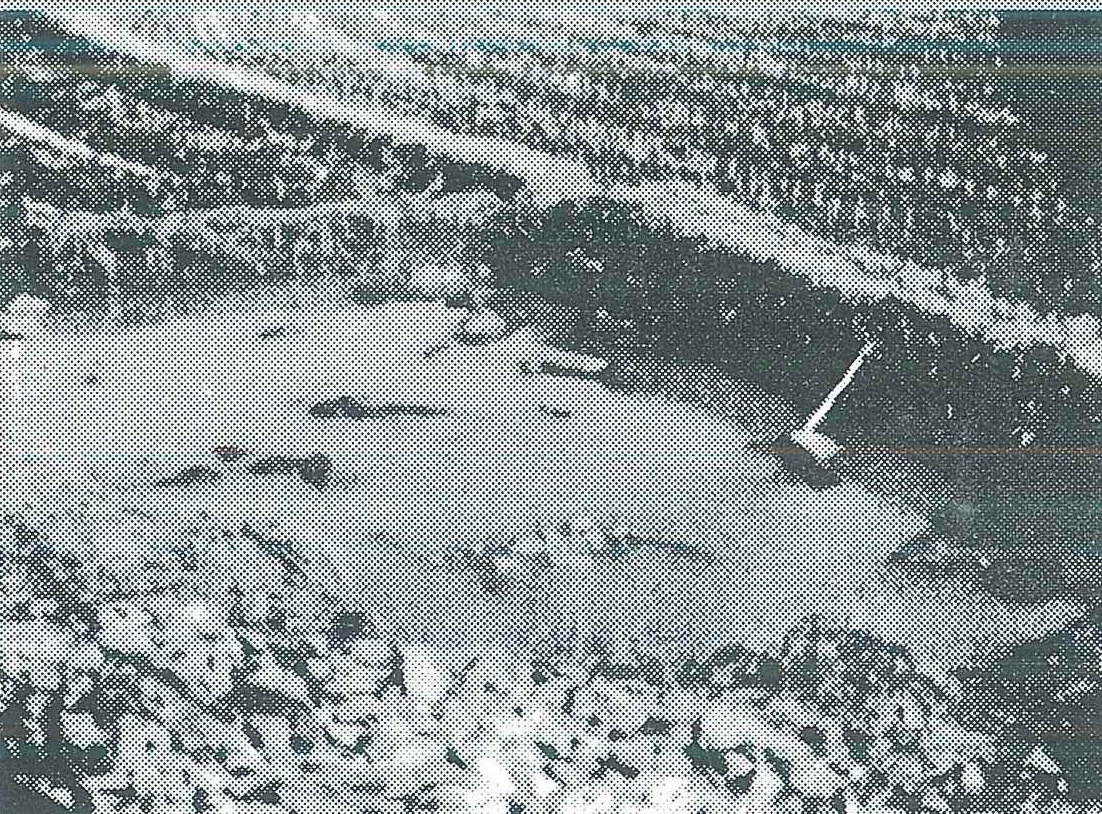
NAVY PHOTOGRAPHER PICTURES SUFFERING AND RUINS THAT RESULTED FROM ATOM BOMB BLAST IN HIROSHIMA, JAPAN. BLAST VICTIMS LIVE IN For FLY-INFESTED HOSPITAL IN BANK BUILDING.


    Undisclosed photos of Japanese

        A-bomb survivors

   U.S. Atomic Bomb Surveys

The National Archives College Park, Maryland

          February 22, 2024

                       SC-473741                   


U.S. NAVY NO. 80G 473741

COPY NEGATIVE

TR-15627

No.473741 Sept. 1945

SUBJECT:

CAPTION:

NAVY PHOTOGRAPHER PICTURES SUFFERING AND RUINS THAT

RESULTED FROM ATOM BOMB BLAST IN HIROSHIMA, JAPAN.

BLAST VICTIMS LIVE IN For FLY-INFESTED HOSPITAL IN BANK BUILDING.

LOCATION: HIROSHIMA, JAPAN

PHOTOGRAPHER: MILLER WAYNE, LI. 

TAKEN BY (UNIT)

LOCAL NO:TR 15627

CLASSIFICATION: RELEASED

During the Battle of Iwo Jima in the Pacific War, Japanese soldiers who survived capture by US forces were forced to bury the bodies of their fellow Japanese soldiers killed in action in the ground.

  During the Battle of Iwo Jima in the Pacific War, Japanese soldiers who survived capture by US forces were forced to bury the bodies of fellow Japanese soldiers killed in action in the ground. Because of the rapid decomposition of corpses on the South Pacific islands, they were usually simply dug out and buried in mass graves without identification. American soldiers had to be bagged and Japanese soldiers had to be buried underground as soon as possible. Pests stripped all flesh from the corpses in a surprisingly short time. Overwhelmed by the heat and rain, the Marines buried the bodies after the battle was over, sometimes months later. As there was no one left on the Japanese side, the bodies were left to fall. Skeletons still survive today. After killing so many Japanese, the Americans dug a trench with bulldozers and pushed the corpses of the Japanese soldiers into it as one large mass grave.

 After about a week of fighting in the northern part of Iwo Jima, where Japanese forces had practically established a garrison in the mountains, the Battle of Iwo Jima, which broke out on 19 February 1945, ended on 25 March with a final banzai attack by about 300 Japanese soldiers. The US forces suffered many casualties, but eventually subdued the Japanese attack. The US forces declared Iwo Jima occupied the following day. American troops spent weeks roaming the jungles of Iwo Jima, finding and killing remaining Japanese soldiers who refused to surrender and chose to continue fighting, and taking some of the surrendered Japanese soldiers as prisoners of war. 2 remaining Japanese soldiers finally surrendered on 2 January 1949, almost four years after the end of World War II. They continued to hide in caves on Iwo Jima, continuing to scavenge food and supplies until they finally surrendered on 2 January 1949, almost four years after the end of World War II.

 On Iwo Jima, the Japanese Ministry of Health, Labour and Welfare discovered two mass graves in October 2010 that may have held the remains of up to 2,000 Japanese soldiers buried there. Almost all of the 22,000 Japanese soldiers tasked with defending the rugged volcanic rocky mountain were killed in the battle. The Battle of Iwo Jima claimed the lives of 6,821 American and 21,570 Japanese soldiers. Dozens of remains are recovered each year, but some 12,000 Japanese are still classified as missing and were estimated to have died on Iwo Jima, along with 218 Americans.


From April 29 to December 24, 1945, as Nazis—and nothing other than Nazis—Austrians were forced to exhume corpses.

The Soviet Union acted in its own self-interest. At times it took an extremely hard line against the Nazis, while at other times it behaved ...